Listen deeply and discern what’s truly needed. You don’t have to have all the answers right away, stay curious.
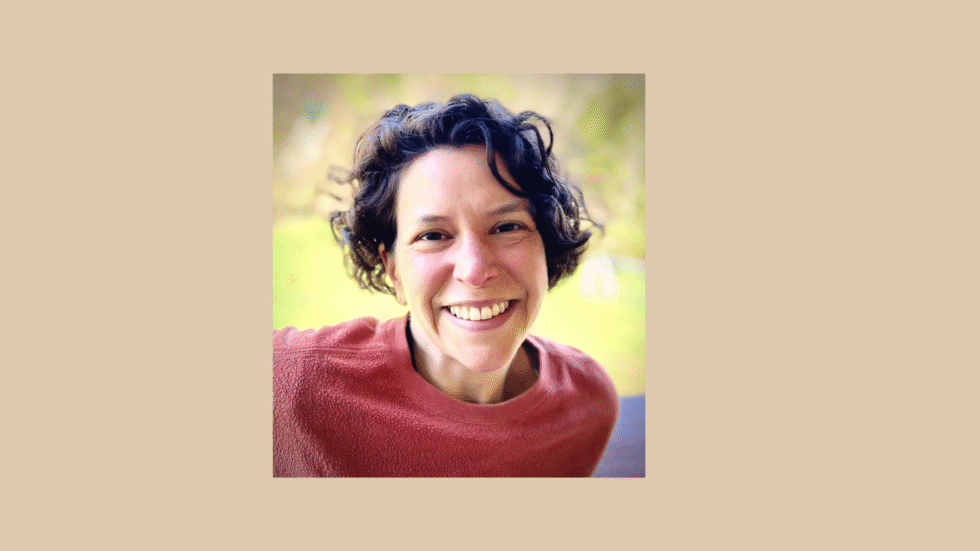
Spotlight: Rebecca Krasner — Executive Director, Center for Countering Antisemitism and Hate
Rebecca Krasner brings a lifelong passion for education, relationship building, and Jewish communal life to her role as the inaugural Executive Director of the Center for Countering Antisemitism and Hate at The Associated. An experienced educator, museum professional, and leader, Rebecca is committed to designing learning experiences that build understanding, connection, and motivate action across the Baltimore Jewish community and beyond.
Can you share a bit about your leadership journey and how it brought you to where you are now?
I earned my graduate degree from Bank Street College of Education, where I learned the power of experiential learning. My career started as a museum educator in art and children’s museums and eventually led me to the Weitzman National Museum of American Jewish History in Philadelphia. As antisemitism rose after 2016, we recognized that we had to revisit our exhibitions, educational programs, and curricular materials to tell a more current and relevant story. Though new to the field of antisemitism prevention, I believed the work was fundamentally educational: helping people understand the complexity of Jewish peoplehood, Jewish identity, and Jewish history through stories that can help to dispel stereotypes. I helped secure a U.S. Department of Education grant to create a curriculum for public schools to address antisemitism, an initiative that recently launched nationwide.
What is your biggest leadership strength?
I am a builder. I ground my work in the relationships I build. I love co-creating with others, imagining what is possible, translating theory into practice, and empowering those around me to recognize their own power.
How do you see your role impacting the broader Baltimore Jewish community?
My hope is that The Center will empower our Baltimore Jewish community to feel safer, more knowledgeable, and have the tools we need to proactively counter antisemitism and hate. I also believe that The Center will be an additional conduit to our broader Baltimore community. Antisemitism is obviously terrible for our Jewish community, but it has negative implications for broader society as well. I believe The Center can be a platform from which we can be in conversation with our neighbors with the shared goals of a safe and thriving Baltimore.
What do you hope to accomplish as the inaugural Executive Director?
My initial goals for The Center are to create system-wide strategies and build capacity so that our agencies can continue to run and expand their programs that counter antisemitism.
Baltimore and The Associated network have a wealth of high-quality programming already happening. My job is to amplify and scale our existing work, help to strategize system wide for greater and efficient impact, and identify gaps. Once we have identified the gaps we will work together, as a system to fill those gaps over time. We will learn from other communities’ experiences and incubate some of our own revolutionary ideas.
How can Na’aleh partner with you on this journey?
I see Na’aleh as an important partner in my work. I hope that Na’a’leh and The Center will work together to bring education about antisemitism and how to counter it to employees and lay leaders. I loved learning about programs like Midday Mingle, which combine education about Jewish holidays and traditions with leadership development. I think Midday Mingle as a strong example of a tool for countering antisemitism, one that helps demystify what it means to be Jewish and fosters greater understanding and connection.
What book or podcast are you listening to right now?
Lately, I’ve been really enjoying The Promised Podcast with Noah Efron. It’s a podcast about Israeli life and culture – with a special focus on Tel Aviv, where Efron serves on the city council. I recently listened to an episode where he described a Selichot service held on top of Tel Aviv’s City Hall, led by a group of queer Jews praying together—many for the first time since coming out.
Hearing that story reminded me why I love Israel. So much of the conversation lately has centered on the hard realities and the challenges, but this episode brought me back to the beauty, creativity, and heart of Israel—what it means to continually create and recreate Jewish life. It was a powerful reminder of what we’re fighting for and why Israel matters.
If you had to give one piece of advice to someone stepping into a new leadership role, what would it be?
Take your time. Talk to as many people as you can. Listen deeply and discern what’s truly needed. You don’t have to have all the answers right away, stay curious.